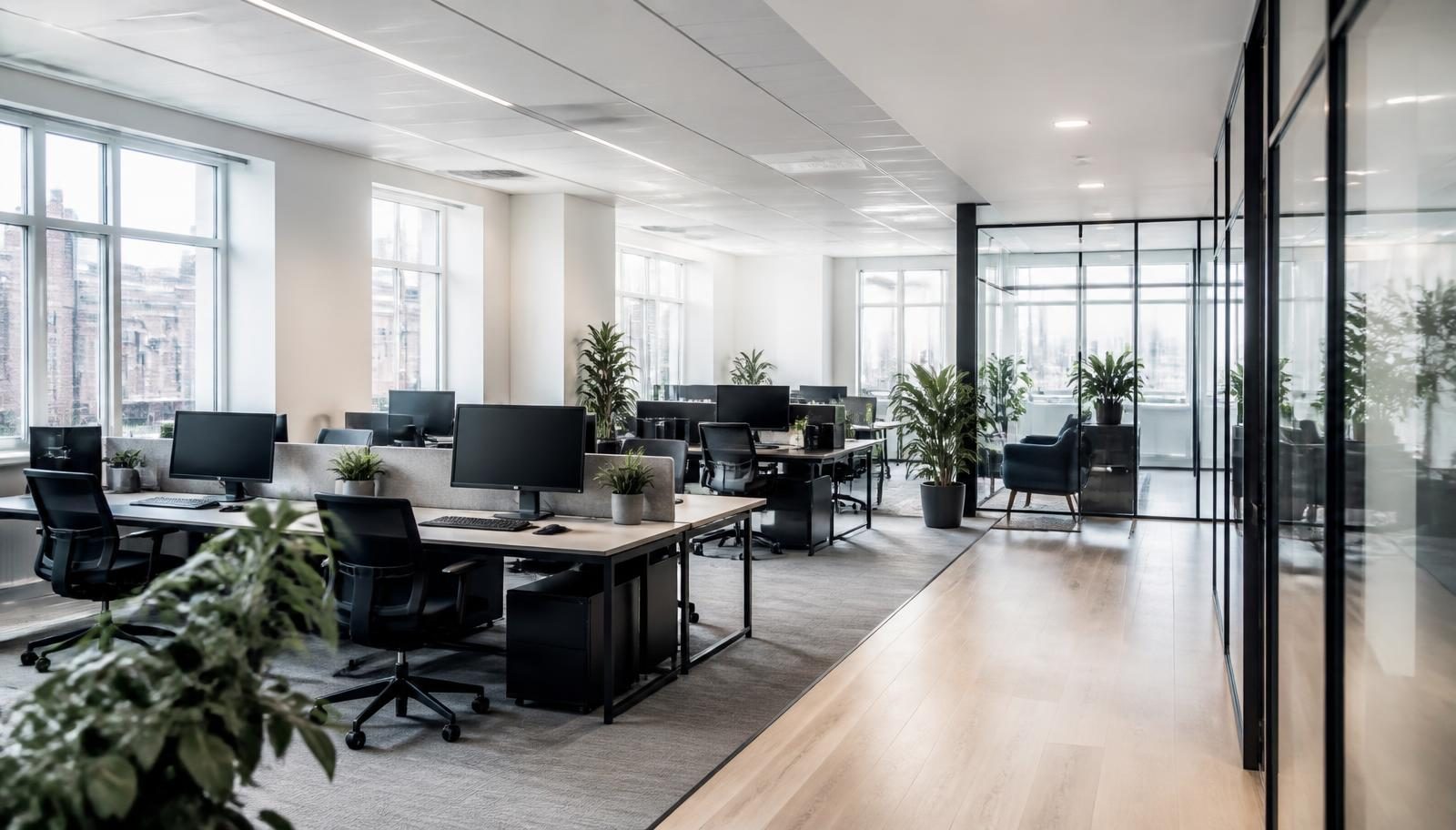
Public liability insurance is a form of business insurance that protects your company when third parties suffer injury or property damage arising from your business operations. For UK office-based businesses, this means cover when something goes wrong involving clients, visitors, delivery personnel, contractors, or any member of the public who interacts with your premises or activities.
Specifically, public liability insurance covers compensation payments to injured parties, legal defence costs including solicitors’ fees and court expenses, and related medical costs where your business is found legally liable. This protection applies whether the incident happens in your office, a shared building reception area where you are found partially responsible, at a client’s premises during a meeting, or at external events tied to your business.
At Taurus Risk, we place cover with FCA-regulated, A-rated UK insurers to protect office-based firms such as consultancies, tech companies, marketing agencies, professional services practices, and real estate managers. Our approach means you receive policy wording tailored to your specific risks rather than generic templates.
Why Office-Based Businesses Need Public Liability in the UK
We often hear from business owners who assume their office is “low risk” and therefore does not require public liability. This assumption can prove costly. Offices regularly host visitors, and even simple hazards can result in substantial compensation claims.
Common scenarios that lead to public liability claims in offices:
Trip Hazards
A client trips over unsecured laptop cables during a meeting
Slips & Falls
A courier or delivery driver slips on a wet floor in reception
Property Damage
Accidental damage to a visitor’s laptop, prototype or artwork
Contractor Injury
A contractor injured while carrying out work on your premises
Modern office-based businesses host meetings, training days, networking events, investor presentations, and off-site client sessions. Each of these increases contact with the public and potential liability exposures. When accidents result in personal injury or damaged property, the financial consequences can escalate rapidly - claims can easily reach tens of thousands of pounds once medical expenses, lost earnings, legal fees, and claimant solicitors’ costs are included.
It is not just the direct financial loss; reputation risk matters too. Corporate clients and local authorities often require proof of public liability insurance before allowing access to their offices or awarding services contracts. Speak with us about your current lease or client contract requirements so we can align your cover with those obligations.
Is Public Liability Insurance a Legal Requirement for Offices?
Public liability insurance is not generally a legal requirement in the UK for office-based businesses as of 2026. There is no statute compelling most businesses to hold this cover; however, many choose to do so as an optional cover to safeguard against the risks outlined above and to satisfy contractual obligations imposed by landlords and clients.
What Does Public Liability Insurance Typically Cover in an Office?
Exact policy wording varies depending on your insurer and policy documents, but office-focused public liability policies share common core features.
Cover usually includes:
- Compensation costs payable to third parties for bodily injury where your business is legally liable
- Compensation for injury or property damage to visitors, clients, contractors, and other non-employees
- Legal expenses for defending claims related to incidents at your premises or arising from your business activities
- Medical costs that might be reclaimed from your business following an accident
Clear examples tailored to offices include a visitor fracturing a wrist after slipping on a freshly mopped corridor, damage to a client’s property such as a laptop knocked from a desk during a meeting, or injury to a delivery driver on your premises. Cover also extends to incidents away from the office, including presentations in client boardrooms, attendance at UK conferences, and visits to investors or suppliers, provided these activities relate to your insured business operations.
What Isn’t Covered by Public Liability Insurance?
Understanding exclusions helps ensure your risk management and additional covers fill any gaps. A public liability insurance policy has defined boundaries.
Injury to your own employees
This sits under employers liability insurance, which we arrange alongside public liability.
Professional mistakes or negligent advice
These require professional indemnity insurance, not public liability.
Damage to your own property
Furniture, computers, servers and equipment require office contents and buildings cover.
Deliberate acts or fraud
Intentional wrongdoing falls outside policy protection.
Known defects ignored
Pre-existing hazards you failed to address may void cover.
Cyber events and data breaches
These typically require specialist cyber insurance.
Product liability insurance covers claims arising from products you manufacture or sell, which differs from general public liability for premises-based risks. Schedule a review with us so we can identify where additional covers like professional indemnity, cyber, or directors and officers liability might be required alongside your public liability cover.
How Much Public Liability Cover Do Office-Based Businesses Need?
The amount of public liability cover your office needs depends on your business activities, visitor numbers, client profile, and building setup rather than a simple one-size-fits-all figure.
Typical limit levels for UK offices:
Key factors when determining your limit:
- Maximum number of visitors at any one time
- Presence of shared reception areas or communal facilities
- Whether customers visit your business premises regularly
- Location in a multi-storey building in busy cities like London or Manchester
- Client and contract requirements specifying minimum limits
Some contracts and tenders will specify a minimum public liability limit such as £5 million. Insurers can provide higher limits through excess layers arranged by brokers like us. We recommend reviewing your indemnity limits annually, particularly if you grow, take larger office space, or begin hosting events.
Public Liability vs Employers Liability vs Professional Indemnity
Understanding how these three main liability covers work together helps office-based companies build comprehensive protection without gaps or unnecessary overlaps.
Public Liability
Protects against: Third-party injury and property damage at your premises or during business operations.
Who it protects: Visitors, clients, contractors, members of the public.
Employers Liability
Protects against: Work-related injury or illness suffered by staff.
Who it protects: Your own employees.
Professional Indemnity
Protects against: Financial loss suffered by clients due to errors, omissions, or negligent advice.
Who it protects: Clients who suffer financial loss from your professional services.
An effective insurance programme for most businesses will include all three covers. At Taurus Risk we often package these together, providing one point of contact for claims and policy changes while typically achieving bundled premium savings.
Risk Management for Office Public Liability Claims
Good risk management reduces both the likelihood and severity of public liability claims in an office environment. Proactive firms are statistically around 40% less likely to make a claim according to industry data, and strong risk controls can support favourable public liability insurance premium levels.
Practical steps for offices:
- Maintain clear walkways free from boxes, bags, and obstacles
- Manage cables with proper trunking or securing to prevent trip hazards
- Ensure effective lighting in corridors, staircases, and reception areas
- Address spillages promptly with documented cleaning and hazard reporting procedures
- Implement visitor sign-in systems and clear fire escape signage
- Schedule regular maintenance of lifts, automatic doors, and communal facilities
- Ensure appropriate supervision of reception and meeting areas
For offices in multi-occupied buildings, tenant and landlord responsibilities should be clearly documented. We can help clients review leases and service charge agreements from an insurance perspective to clarify who bears responsibility for shared areas. Staff training on hosting visitors, reporting near misses, and responding immediately to accidents helps defend a claim or reduce compensation costs if a public liability incident occurs.
Working with Taurus Risk for Office Insurance
We are an independent London-based insurance broker specialising in commercial and private client solutions. We are FCA regulated and work with A-rated insurers to secure the right insurance for businesses across the UK.
We work across multiple sectors with strong representation in office-based industries, including technology, real estate, hospitality head offices, and professional services firms. Our team understands the specific risks offices face and the contractual requirements that landlords and clients impose.
Contact us today to obtain a quote, arrange a remote or in-person consultation, or request an independent review of your existing public liability arrangements.
Frequently Asked Questions
Does public liability insurance cover visitors using our serviced office or coworking space?
Public liability insurance for an individual office tenant generally covers liability arising from your own business activities and areas you control, such as your private office and meeting rooms you book. Responsibility for shared areas like receptions, lifts, and communal kitchens is often split between the landlord or operator and each tenant, depending on contractual terms and service agreements. We recommend checking both your own insurance policy and the operator’s master policy. Share your licence agreement with us so we can confirm how liability is allocated and whether any gaps exist.
Are clients visiting from outside the UK covered by our public liability insurance?
For most UK office-based policies, visitors are covered regardless of nationality, provided the incident occurs within territories specified in the policy. This typically includes the UK and sometimes wider Europe. The visitor’s country of origin does not affect coverage for incidents at your UK premises. If your staff travel abroad to meet clients or attend overseas conferences, territorial limits and jurisdiction clauses become important - discuss your itinerary with us so we can confirm territorial limits and arrange necessary extensions.
Will our public liability policy cover client events we host at external venues?
Many office-focused public liability policies automatically extend to cover activities at temporary locations in the UK, including hired conference rooms and hotels, provided the events relate to your insured business. However, larger venues often require evidence of minimum public liability limits such as £5 million and may include indemnity clauses in hire contracts. Send event contracts and venue terms to us in advance so we can confirm whether your existing cover is sufficient.
How often should we review our office public liability cover and limits?
We recommend a formal review at least annually, typically at renewal, to reflect changes in headcount, visitor numbers, office layout, and business activities. Certain trigger events should prompt immediate mid-term review, including moving to a new building, opening regional offices, winning a major client with specific requirements, or beginning to host larger events. Public liability premiums are generally tax deductible business costs, making regular review worthwhile from a financial planning perspective.
Can home-based office workers rely on their home insurance instead of public liability?
Standard UK home insurance usually excludes business activities, particularly where clients or couriers regularly visit the customer’s home or where work equipment is used for commercial purposes. Small business owners and sole traders working from home may still face public liability exposures when visitors suffer injury on the premises. With around 30% of UK offices now supporting hybrid or remote working, this has become an increasingly important consideration.