Insuring a block of flats differs from insuring a single property in one decisive respect: responsibility is divided. The building is insured by one party, the individual flats are occupied by another, and the common parts sit between them. Getting the arrangement right depends less on comparing quotations than on establishing the correct facts before approaching the market.
This checklist sets out what freeholders, residents' management companies (RMCs), right to manage (RTM) companies and managing agents need to establish before requesting a quotation, so the cover bought is priced against the building's actual risk rather than a generic estimate. For wider context, read our block of flats insurance guide and our block of flats insurance specialism page.
1. Establish who is responsible
Before anything else, confirm where the obligation to insure lies. The lease is the governing document, and the party responsible under it must arrange cover for the entire building and maintain adequate buildings cover.
- Who holds the insuring obligation under the lease: freeholder, management company, RMC, RTM company or managing agent.
- What the lease requires to be insured: the structure alone, or the structure plus specified fixtures and fittings.
- How the premium is recovered, typically through service charge apportionment as set out in the lease.
- Whether any leaseholder holds a separate right or obligation to insure their own demise.
- Whether a mortgagee or lender imposes conditions such as interest noted, minimum limits or notice provisions.
Our guides to who is responsible for insuring a block of flats and freehold and leasehold buildings insurance cover this division of responsibility in full. Where management has transferred, our guide to block of flats insurance after RTM explains what changes.
Match the named insured to the lease
2. Gather the building information
Underwriters price a block on its physical characteristics, so assemble detailed information before approaching the market.
- Full postal address and all block or building names.
- Number of flats and the number of separate blocks covered by the policy.
- Number of storeys, including any basement or roof-level accommodation.
- Year of construction and, where applicable, year of conversion.
- Construction type of walls, floors and roof, specified separately.
- Any listed status or conservation area designation.
- Presence of composite or cladding materials and any EWS1 or fire safety assessment held.
- Any commercial units within the building and their trade.
- Lifts, communal boilers, plant or pressure systems, which carry engineering inspection obligations.
- Communal areas: hallways, stairwells, lobbies, gardens, car parks, bin stores and drying areas.
- Any flat roof sections, with their age and last renewal date.
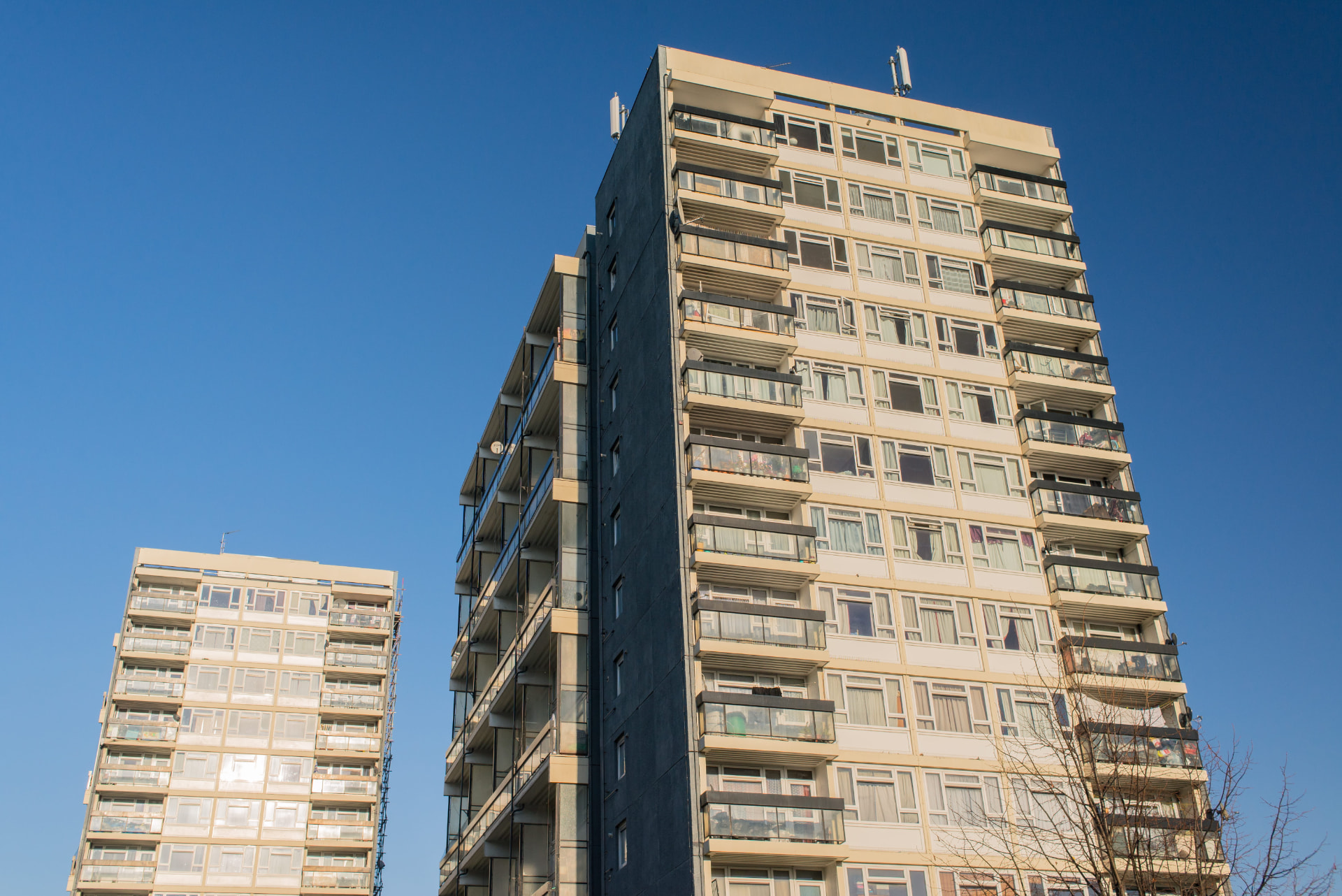
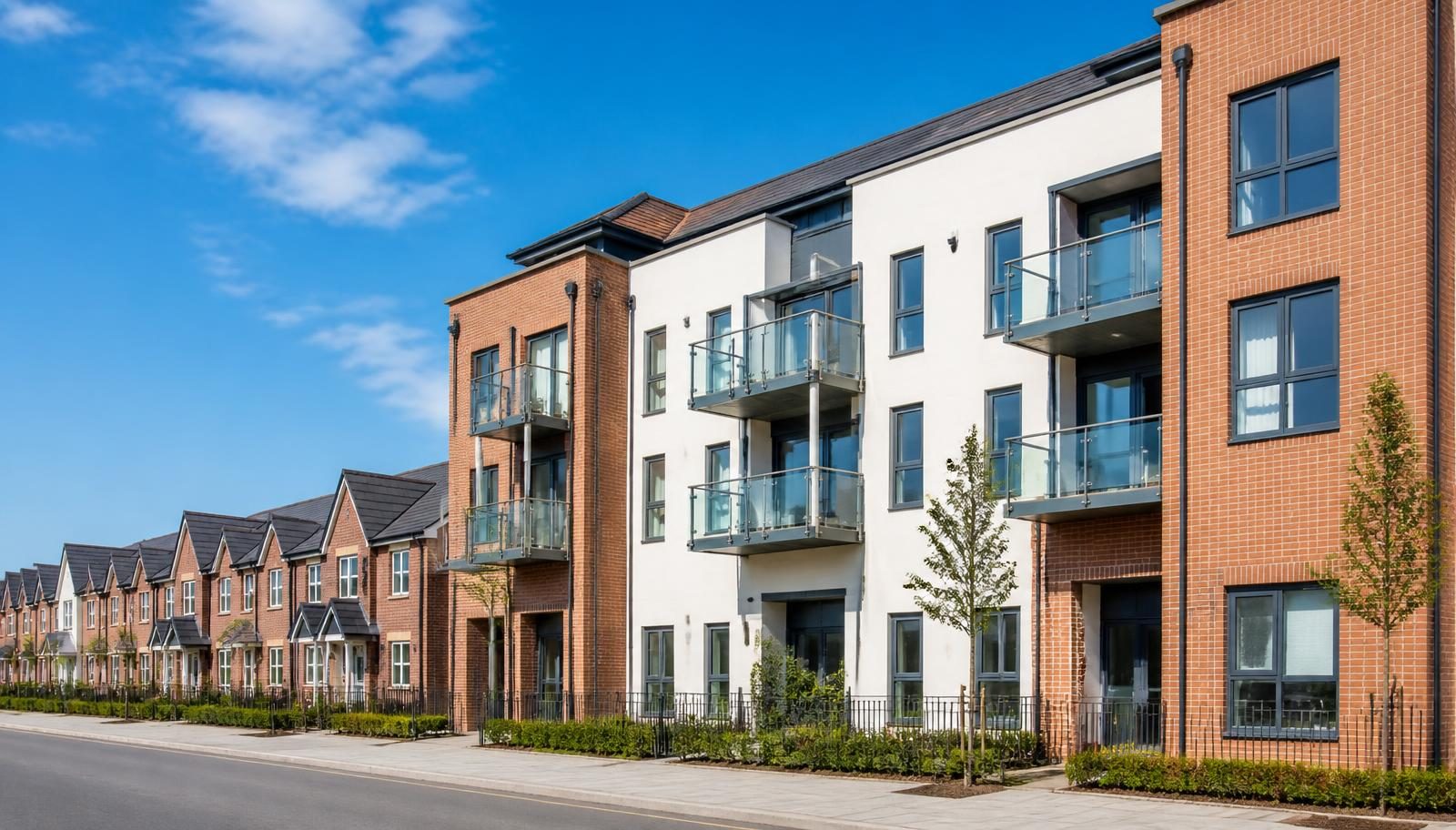
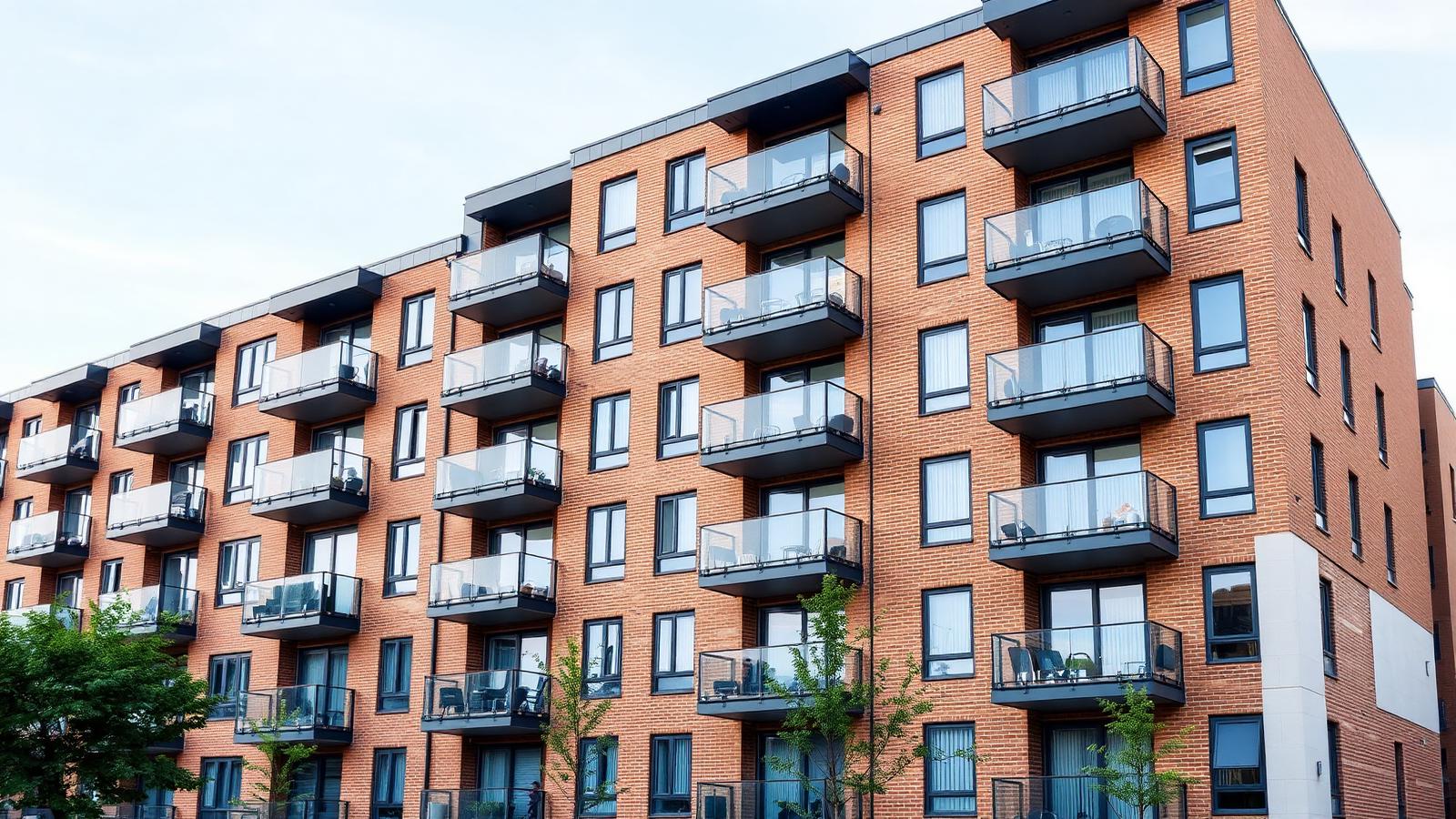
Modern, purpose-built blocks often attract lower premiums, while more complex, taller or higher-risk buildings may face higher premiums.
3. Establish the sum insured
The buildings sum insured is the most consequential figure in the policy and the most frequent source of shortfall at claim. It must represent the cost of reinstatement, not market value, purchase price or book value, and should include demolition, site clearance, professional fees, debris removal and the cost of compliance with current building regulations.
A professional valuation produced by a RICS Chartered Surveyor is recommended. Generic online rebuild calculators are not designed for multi-occupancy residential buildings, conversions, listed fabric or blocks with commercial elements. The valuation should be reviewed periodically and index-linked between formal reassessments.
How average works in practice
Construction details and occupancy should always be declared accurately, and fire safety risks and cladding information disclosed clearly for underwriting purposes. Our guide to how much to insure a block of flats for sets out the valuation basis in detail.
4. Confirm the cover sections
Buildings, all risks
The block policy should cover the structure, communal areas, fixtures and fittings within the insured demise, and communal plant. Water damage cover should include trace and access for locating leaks as part of the buildings section.
Property owners' liability (public liability)
Property owners' liability is the block policy's version of public liability cover: the two terms describe the same protection for third-party injury and property damage claims arising from the communal parts and grounds. It responds to claims by leaseholders, tenants, visitors or contractors. The appropriate limit depends on the building, its exposure and any lender or contractual requirements. Limits can scale substantially where the risk warrants it, for example £2 million is often used as a starting point for small blocks, while extensive communal grounds or facilities such as swimming pools may require higher limits.
Employers' liability insurance is a separate legal requirement and applies only where the RMC, RTM company or freeholder directly employs someone, such as a caretaker, cleaner, gardener or porter. Where those roles are carried out by contractors, employers' liability is not required in respect of them, though it is worth confirming the contractor holds their own appropriate insurance. Volunteer directors carry a different legal status to employees, so confirm which arrangement applies to each individual.
Loss of rent and alternative accommodation
This section is generally relevant where a single freeholder or owner receives rental income across the flats, since individual leaseholders typically arrange their own landlord insurance. Where it applies it provides loss of rent insurance for income lost during repairs, can cover ground rent where the insured party relies on it, and funds alternative accommodation for occupants. The indemnity period and limit should realistically match the timeline to reinstate a multi-occupancy building and the number of flats that may need rehousing. For blocks in high-risk areas, flood risk should be clearly defined in the policy.
Directors and officers (D&O)
Where the block is managed through an RMC or RTM company, the directors carry personal liability for management decisions. This requires separate cover and is not part of the buildings policy. D&O or related legal expenses protection can also assist with legal costs arising from management disputes or proceedings. See our guide to D&O insurance for RMC directors.
Extensions to consider
- Legal expenses: costs in service charge recovery, lease disputes and contract or employment matters.
- Directors and officers: particularly where the block relies on volunteer management.
- Engineering inspections: statutory inspection of lifts, communal boilers and pressure systems.
- Terrorism: relevant depending on location variables, and often more important for higher-value urban blocks.
- Land liability: grounds, car parks and external areas.
- Accidental damage: particularly relevant to communal plant and services.
- Malicious damage and trace and access: in communal parts and shared services, where not already provided under the buildings section.
Why use a specialist broker?
We place cover with leading UK insurers, negotiate terms on your behalf and stay with you through renewals and claims.
- Whole of market access to leading UK insurers
- Policy wordings checked line by line, not price alone
- Same day quotes and claims support from a named broker
Same day quotes, no obligation
5. What the policy does not cover
Establish clearly with leaseholders what the policy does not cover, as this is the most common source of dispute after a loss.
- Leaseholders' contents: carpets, furniture and personal possessions inside their flats.
- Tenants' improvements, in most leases.
- Claims for individual flat contents, for example water damage to a downstairs flat's belongings caused by an upstairs leak, which fall under the leaseholder's own home or landlord policy.
- Terrorism, unless specifically added, which may be required by lenders or regulation.
Confirm what the lease defines as part of the structure and what forms part of the individual demise. That boundary determines which policy responds and can include internal walls and other permanent fixtures where the lease defines them as part of the building. When comparing policies, look beyond price at what the extensions provide, how the policy operates, and the limitations and exclusions on each option. Our guide to what buildings insurance covers for a block of flats explains the boundary in full.
6. Compile the claims and risk record
Claims experience and history, typically covering the last three to five years with cause, date and settlement figures, should be assembled before the market is approached. Poor records can increase premiums or restrict the terms an insurer is willing to offer.
Escape of water history matters most, as it is the most frequent claim category in multi-occupancy residential blocks. Note any pipework renewal undertaken since. A leak affecting an individual flat is often dealt with under the block policy for the building damage, while theft of contents inside that unit usually sits with the leaseholder's own policy.
- Current fire risk assessments with actions closed out.
- Fixed wire testing on communal circuits.
- Lift and plant inspection records.
- Water hygiene and legionella risk assessments where communal water systems are present.
- Known defects, ongoing works or planned major works.
- Any periods during which flats stood empty, since restricted terms may apply.
7. Establish occupancy and use
Underwriters rate a block on how it is actually occupied and used across all the flats and the entire block. Misdeclaration here is a recognised route to a declined claim.
| Occupancy factor | Why it matters | What to declare |
|---|---|---|
| Owner-occupied vs let | Different claim patterns and insurer appetite | The proportion of each across the block |
| Short-term or holiday letting | Rated differently to assured shorthold tenancies | Any flats used for short-term lets |
| Housing association, local authority or supported living | Specific underwriting appetite applies | Which units and under what arrangement |
| Occupant profile | Shapes the underwriter's view of the risk | For example professionals, retired residents or students |
| Vacant flats | Cover often restricts to FLEEA terms | Which flats are empty and for how long |
| Commercial tenants | Trade-specific exposure within the block | The nature of each trade |
A central claims procedure should be in place, especially where one incident affects multiple flats.
8. Before you sign
- The insured party matches the party obliged to insure under the lease.
- The sum insured is supported by a current professional valuation.
- Subsidence is included within all risks cover.
- The property owners' liability limit is assessed against exposure and lender requirements.
- Employers' liability is in place where anyone is directly employed.
- Loss of rent and alternative accommodation indemnity periods are realistic for a multi-occupancy reinstatement.
- Directors and officers cover is arranged separately where an RMC or RTM company manages the block.
- All communal plant is declared and engineering inspections arranged.
- Occupancy split, occupant type, letting types and vacancies are declared accurately.
- The excess structure is understood, including any separate subsidence or escape of water excess.
- Subjectivities and risk improvement conditions are identified, with a plan and timeline to satisfy them.
- Leaseholders are informed of the contents boundary and their own insurance obligations.
9. Getting the right quotation
Presenting a block to the market with this information assembled produces a quotation built on the building as it actually stands, rather than a generic estimate that leaves gaps to surface later. Conversions, mixed use, cladding and the split between owner-occupied and let flats all change the risk presented and should be reflected from the first enquiry.
A structured checklist helps prevent gaps in cover, and the policy should match the ownership structure, including freeholder and leaseholder responsibilities.
Frequently Asked Questions
Who is responsible for arranging block of flats insurance?
The party the lease places the insuring obligation on. That is usually the freeholder, but it can be a management company, an RMC, an RTM company or a managing agent acting on their behalf. The named insured on the policy should match that party.
How much should a block of flats be insured for?
For the full cost of reinstatement, including demolition, site clearance, professional fees, debris removal and compliance with current building regulations. This is not market value, and for multi-occupancy buildings it should be established by a RICS Chartered Surveyor rather than an online calculator.
Does block of flats insurance cover leaseholders' contents?
No. The block policy covers the building, communal areas and, where the lease says so, specified fixtures and fittings. Carpets, furniture and personal possessions inside individual flats remain the leaseholder's responsibility through their own home or landlord insurance.
Does an RMC need employers' liability insurance?
Only where it directly employs someone, such as a caretaker, cleaner, gardener or porter. Where those roles are carried out by contractors it is not required in respect of them, though the contractor's own insurance should be confirmed. Volunteer directors have a different legal status, so each arrangement should be checked.
Do RMC and RTM directors need directors and officers insurance?
It is separate from the buildings policy and widely recommended. Directors of an RMC or RTM company carry personal liability for management decisions, including how insurance is arranged, and D&O cover responds to claims alleging wrongful acts in that role.
What happens if flats in the block are empty?
Vacancy is a material fact and must be declared. Where units are genuinely unoccupied, cover parameters frequently restrict down to FLEEA terms, meaning fire, lightning, earthquake, explosion and aircraft, so the position should be agreed with the broker in advance.
Get a quotation built on the building as it stands
We advise freeholders, RMCs, RTM companies, residents' association bodies, management companies and managing agents buying or switching block of flats insurance. We structure quotations around the lease obligations and the building as it actually stands, to help secure suitable cover at the right price.
For more complex flats risks, cover can be arranged with specialist insurers from a leading panel, which can be relevant for property owners and portfolio investors. Request a quote or contact our team.