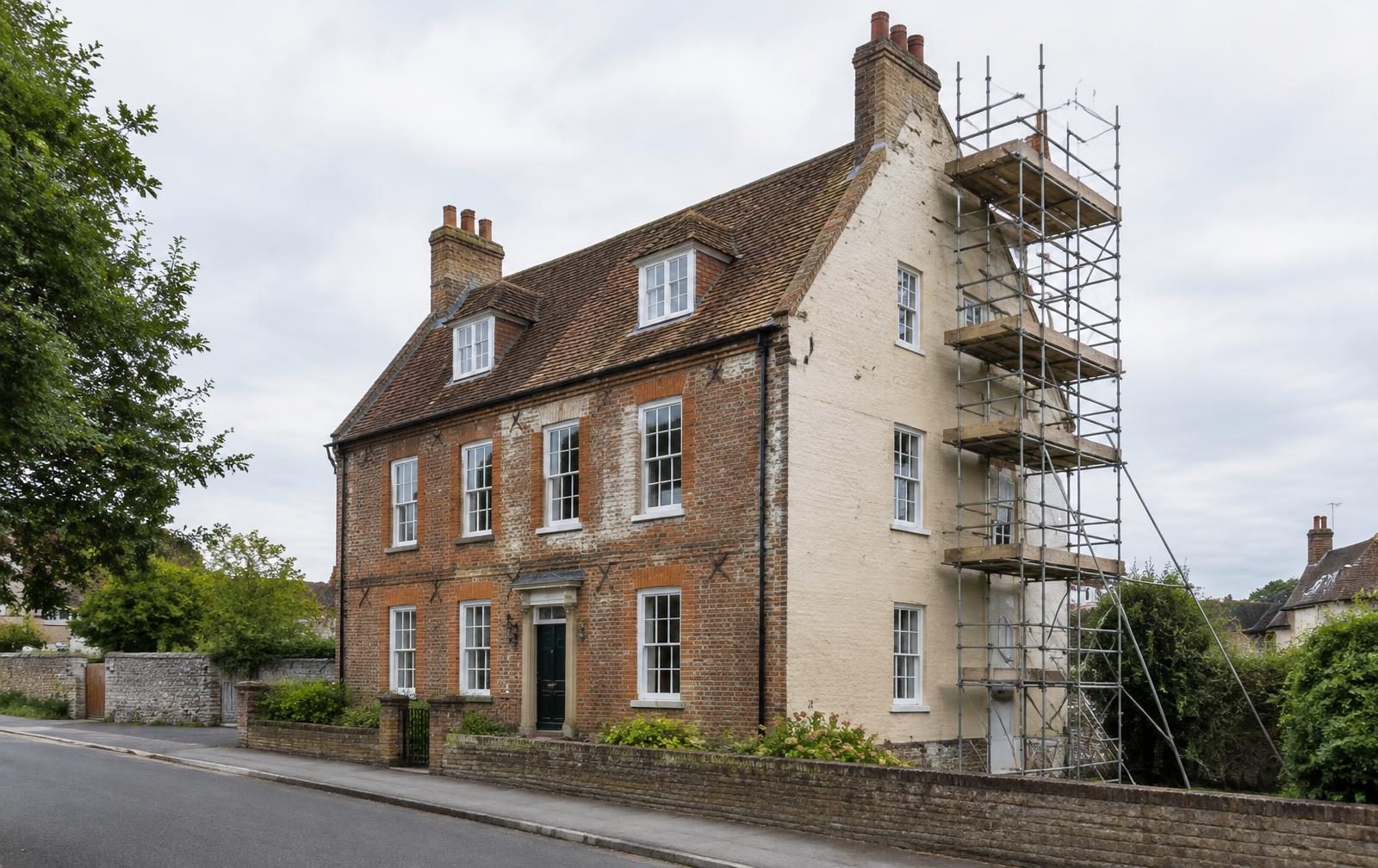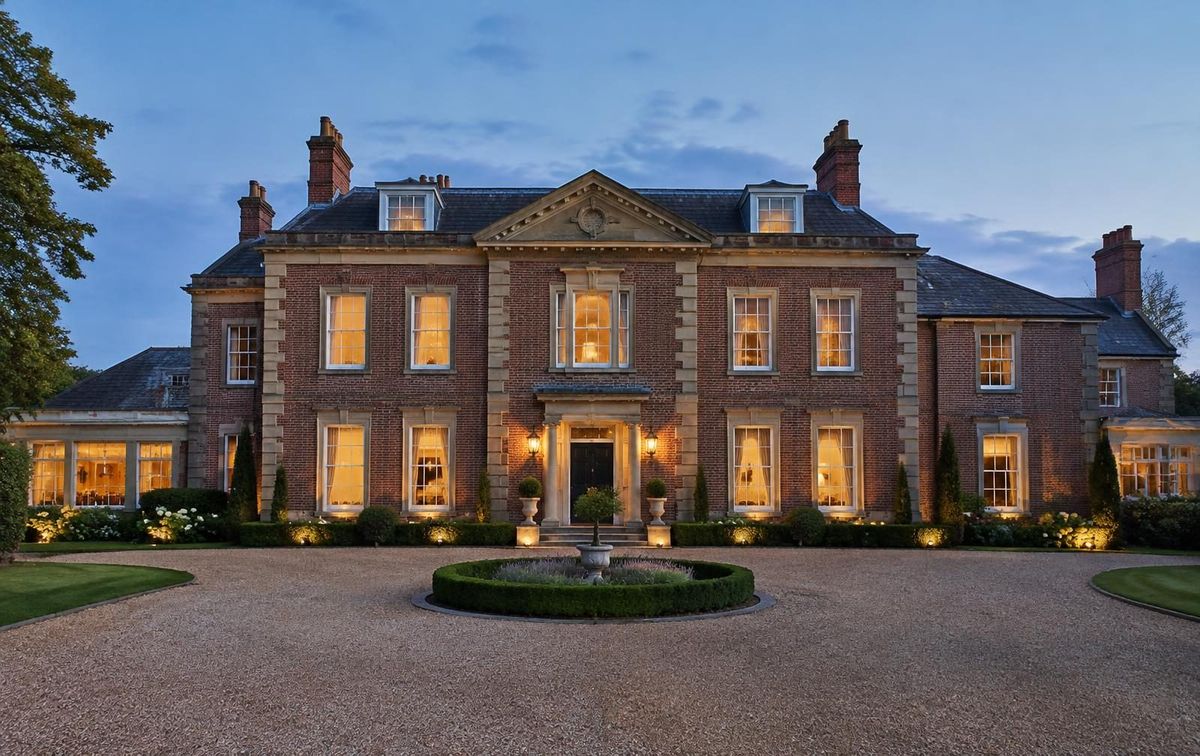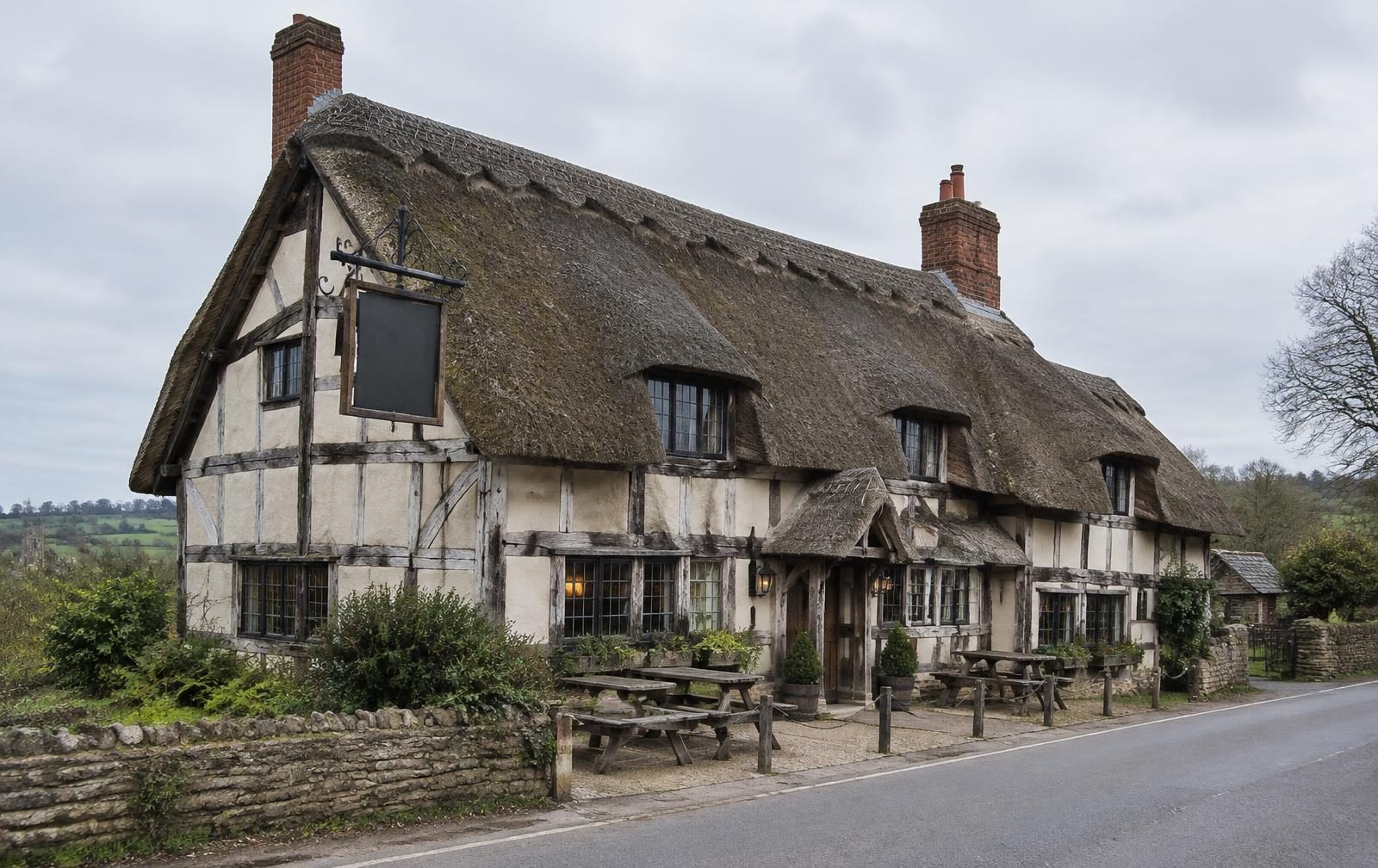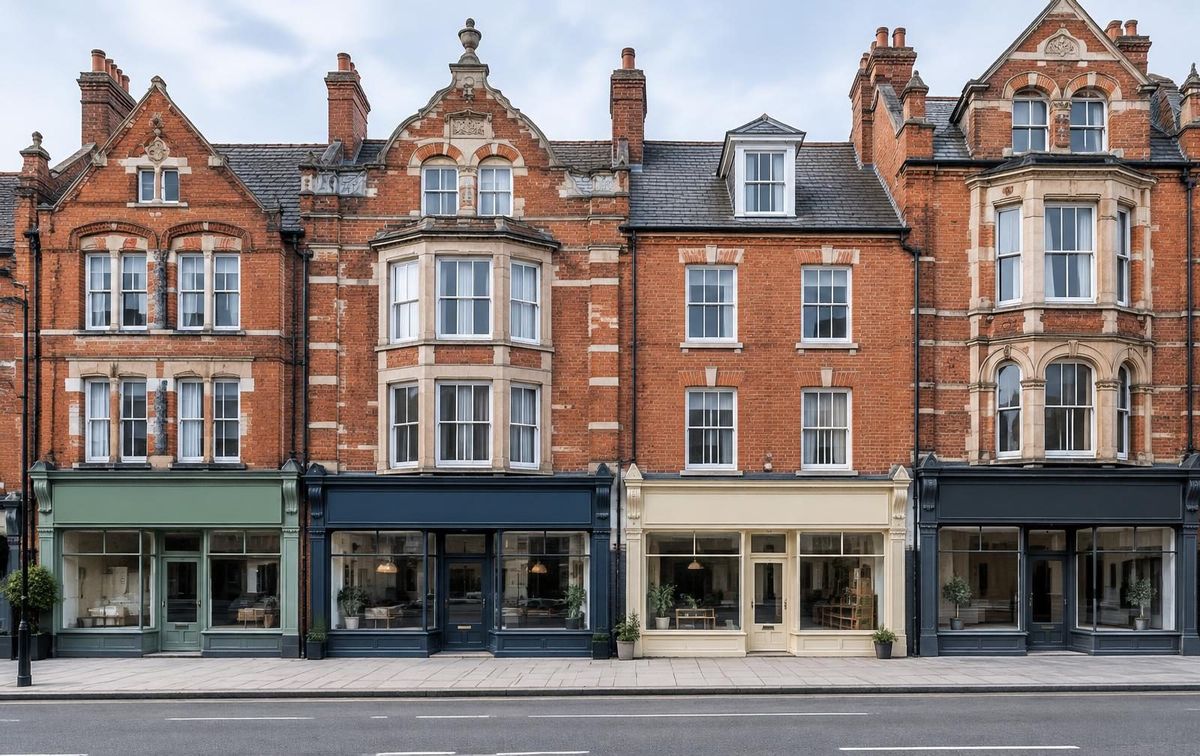
What does it mean for a building to be listed?
A listed building is one formally recognised as being of special architectural or historic interest. Listing gives it legal protection, so changes that affect its character need consent.
Each part of the UK runs its own system:
| Nation | Body | Grades or categories |
|---|---|---|
| England | Historic England | Grade I, Grade II*, Grade II |
| Wales | Cadw | Grade I, Grade II*, Grade II |
| Scotland | Historic Environment Scotland | Category A, B, C |
| Northern Ireland | Department for Communities | Grades A, B+, B, B1, B2 |
In England, Historic England says only 2.5% of listed buildings are Grade I and 5.5% are Grade II*. The remaining 92% are Grade II, so most listed homes and businesses fall in this grade. Scotland has around 47,000 listed buildings, Wales around 30,000 and Northern Ireland over 9,100.
Listing is not limited to the facade. Cadw notes that listing "covers the entire building, both inside and outside". It can also extend to structures within the curtilage built before 1 July 1948.
For insurance, this matters. Panelling, staircases, plasterwork and outbuildings may all need to be reinstated in kind. Our guide to listed building grades and insurance covers how grade affects underwriting.
Why is insuring a listed building different from standard cover?
Standard home and commercial policies are priced and worded for modern construction. A listed building can cost far more to repair than a modern one of the same size, and the work can take much longer.
Common gaps include:
- Rebuild basis. Some policies allow the insurer to reinstate with modern equivalent materials. Heritage law and conservation officers may not accept that.
- Sums insured. Figures based on floor area and standard build rates can badly understate traditional craft costs.
- Professional fees. Heritage projects often need conservation architects, structural engineers and planning consultants.
- Debris removal. Salvaging and storing historic materials for reuse costs more than skip hire.
- Time. Consent, specialist labour and material sourcing can stretch timescales. That affects alternative accommodation and loss of rent cover.
How is a listed building's rebuild cost worked out?
The rebuild cost is the full cost of reinstating the building as it was, with matching materials and methods. It includes fees, debris removal and VAT where applicable. It is not the market value.
Insurers take different approaches to surveys. For larger properties, some will fund a reinstatement cost survey themselves. Some will want to survey a listed property in any case before offering terms. For smaller properties, others may ask you to commission one at your own cost.
A reinstatement cost assessment by a surveyor with heritage experience is the most reliable route. They should account for:
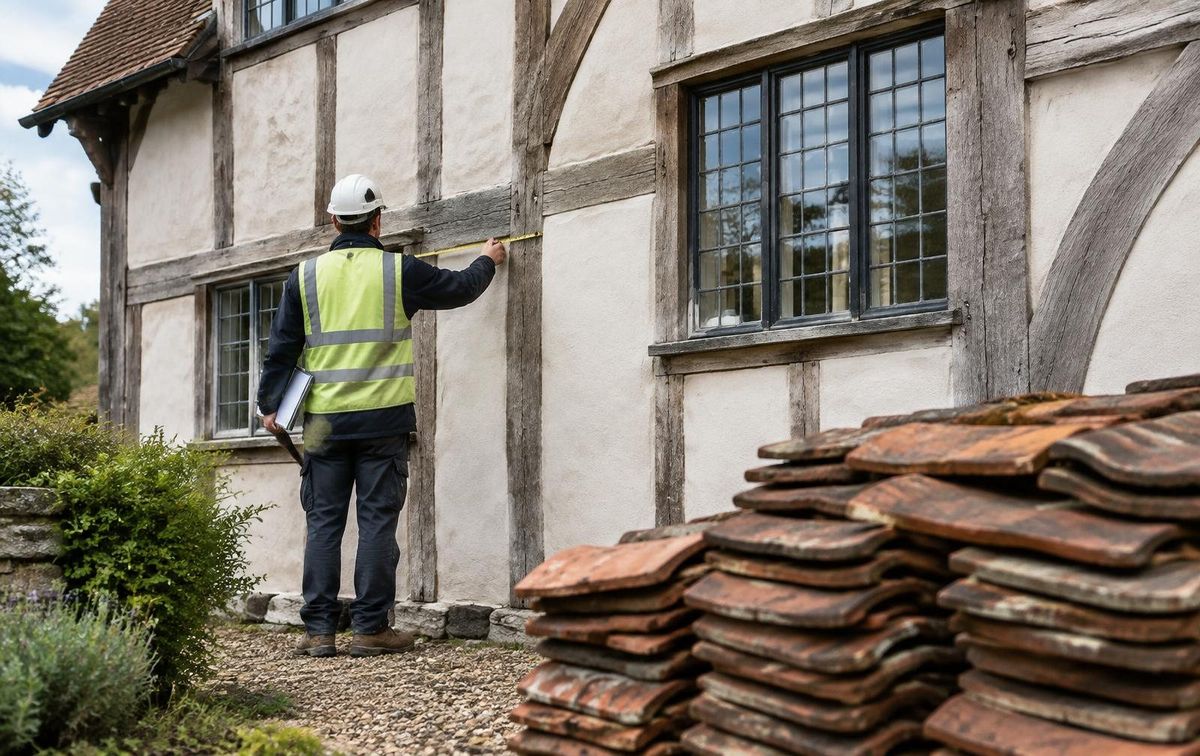
- Traditional materials such as lime mortar, handmade brick, natural stone, oak framing, slate or thatch.
- Specialist trades, including stonemasons, joiners, leadworkers and plasterers.
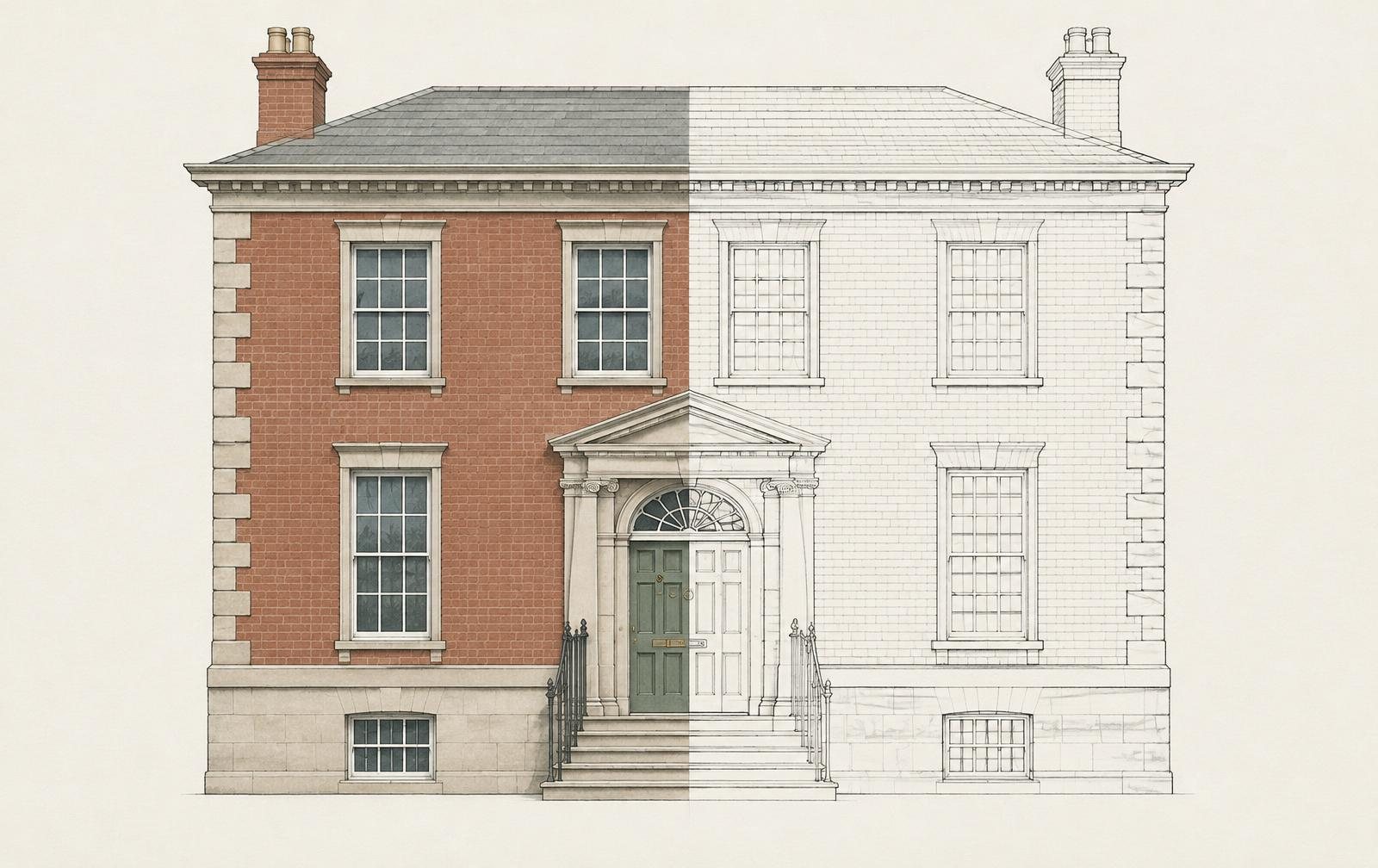
- Architectural details: cornices, mouldings, sash windows, decorative ironwork.
- Professional fees and the cost of obtaining consents.
- Demolition, site clearance and safe salvage of historic fabric.
VAT needs care. Building work to existing buildings is normally standard-rated. HMRC's VAT Notice 708 confirms approved alterations to listed dwellings have also been standard-rated since 1 October 2012.
If you cannot recover VAT, make sure it is included in the sum insured. We explore this further in listed building rebuild cost and underinsurance in listed buildings.
Illustrative example: A Grade II farmhouse has a market value of £900,000. A heritage surveyor puts its reinstatement cost at £1,400,000 once oak framing, lime plaster and fees are included. Insured at market value, the owner would be underinsured by over a third, and many policies would reduce a claim proportionately.
What about heritage buildings that aren't listed?
Many heritage buildings are not listed but raise the same insurance issues. Period properties, traditional-construction buildings and buildings in conservation areas often need the same like-for-like approach.
Traditional construction includes timber frame, cob, thatch and solid stone walls. Rebuilding these properly needs traditional materials, methods and trades. Insurers therefore tend to treat them in a similar way to listed buildings.
Listed building consent does not apply to unlisted buildings. However, planning rules can still apply to buildings in a conservation area, so check with the local planning authority before any works.
For historic building insurance or heritage property insurance, the principles in this guide still apply. Describe the construction fully and check the policy will reinstate in matching materials.
Is it more expensive to insure a listed building?
Often, yes, because the sum insured is usually higher and repairs take longer. But listing alone does not set the price. Condition, construction, fire protection and claims history matter just as much.
A well-maintained Grade II house with modern wiring and good fire precautions may be very insurable. A thatched, timber-framed property with old wiring and a wood burner will face closer scrutiny. Our guide to what listed building insurance costs explains the main rating factors.
Which insurers cover listed buildings?
A number of UK insurers and specialist underwriters will consider listed buildings. Appetite varies by grade, construction, value, use and claims history.
Some focus on high-value home insurance. Others prefer commercial property insurance for hotels, pubs and offices. Some will write Grade II readily but treat Grade I or thatch more cautiously.
A broker's job is to know which markets fit your building. We then present it in the way each underwriter needs.
Why heritage claims experience matters
Price and wording are only part of the choice. When a listed building has a serious fire or flood, what matters most is how well the insurer handles a large heritage claim. Insurers with a long record of reinstating listed buildings tend to offer more support when it counts:
- Specialist claims handlers and loss adjusters who understand conservation requirements and listed building consent.
- Established relationships with conservation architects, heritage surveyors and specialist contractors. This matters when those trades are in demand.
- Emergency response and salvage that prioritises making the building safe and recording and saving historic fabric.
- Realistic settlement of like-for-like work agreed with the conservation officer, rather than pressure to use modern equivalents.
When we compare insurers for a listed building, we weigh their experience of handling large heritage reinstatement claims, not just the premium.
What do insurers ask about a listed building?
Insurers want a clear picture of what they would have to rebuild and how likely a loss is. Expect questions such as these:
| Area | What insurers typically ask |
|---|---|
| Listing | Grade or category, listing entry, any curtilage structures |
| Construction | Walls, framing, floors, age, any non-standard materials |
| Roof | Slate, tile, lead, flat areas or thatch; date of last inspection |
| Heating | Type of system, open fires, wood burners, chimney sweeping |
| Electrics | Age of wiring, date of last electrical inspection |
| Occupancy | Owner-occupied, let, commercial use, periods unoccupied |
| Security | Locks, intruder alarm, CCTV, access to roof and scaffold |
| Fire protection | Detection, alarms, compartmentation, extinguishers, hot works controls |
| Works | Planned or ongoing renovation, contractor details, consents |
Thatch deserves particular care. See our guide to thatched property insurance.
What to have ready for a quote
- The listing entry, grade or category, and any curtilage buildings.
- Construction of the walls, roof, floors and framing, and the approximate age of each part.
- A current reinstatement cost assessment: its figure, when it was done and by whom.
- Whether an electrical inspection has been carried out, and when, plus any rewiring.
- Heating details, including open fires, stoves and chimney sweeping records.
- Fire and intruder alarm details, including whether they are monitored.
- Other security, such as locks, lighting and CCTV.
- How each part of the building is occupied and used.
- Any periods the building is, or will be, unoccupied.
- Any planned or ongoing works, with consents.
- Your claims record for the last five years.
- If you trade from the building: annual revenues, wageroll and your current business interruption basis and indemnity period.
How does listed building consent affect insurance claims?
Consent can add time, fees and specified materials to a claim. Unauthorised past works can also cause disputes over what the insurer will pay to reinstate.
Listed building consent is permission from the local planning authority for works affecting a building's special interest. Carrying out such works without it is a criminal offence.
In England and Wales, this is set by the Planning (Listed Buildings and Conservation Areas) Act 1990. Section 9 provides for up to two years' imprisonment, a fine, or both, on conviction on indictment. Scotland has equivalent legislation in the Planning (Listed Buildings and Conservation Areas) (Scotland) Act 1997.
Consent affects claims in three ways:
- Reinstatement after damage may itself need consent, adding time and fees.
- The conservation officer may specify materials and methods, and the claim will usually be expected to fund them.
- Unauthorised past alterations can create disputes over what the insurer is liable to reinstate. They may also need reversing at the owner's cost.
What about renovation works and empty periods?
Works and unoccupancy are two of the most common reasons listed building claims go wrong. Both change the risk, so most policies require you to tell your insurer about them.
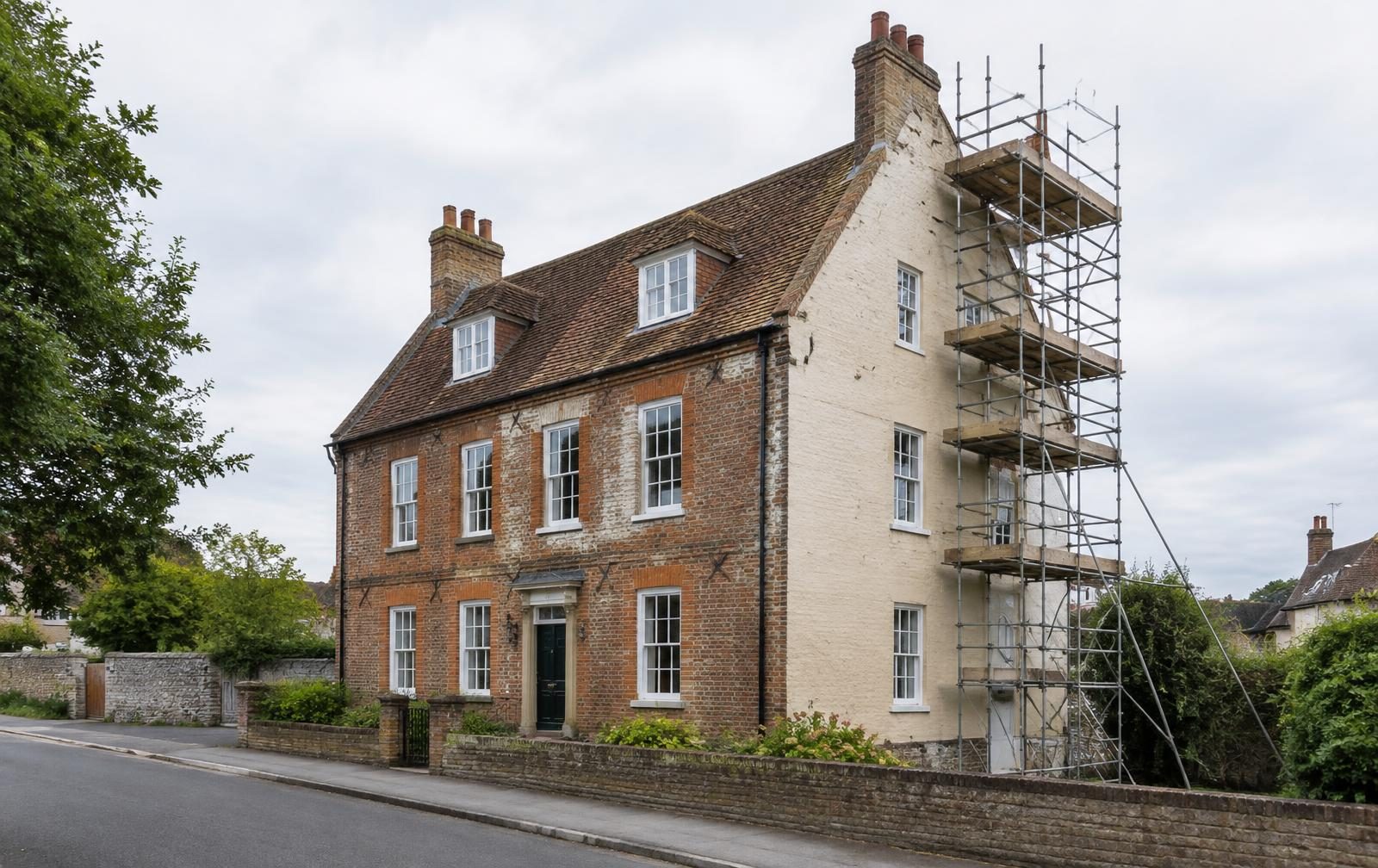
Renovation: Hot works, such as lead welding or paint stripping with heat, are a well-known fire risk in historic buildings. Tell your insurer before work starts. Agree who insures the existing structure and the new works, and coordinate with the contractor's insurers.
Read more in listed building renovation insurance.
Unoccupancy: Most policies restrict cover once a building has been empty beyond a set period. Conditions often include regular inspections, draining water systems and securing the building. See empty listed building insurance.
How do claims on listed buildings work?
Listed building claims usually involve more people and take longer. The loss adjuster will often work with the conservation officer, a heritage architect and specialist contractors.
A typical sequence:
- Make the building safe, recording and salvaging historic material where possible.
- Agree the scope with the adjuster and, where needed, the conservation officer.
- Obtain any required listed building consent for reinstatement.
- Source matching materials and specialist craftsmen.
- Reinstate, with sign-off from the local authority where required.
Plan for that time. Homeowners need adequate alternative accommodation cover. Landlords and businesses need business interruption or loss of rent with a realistic indemnity period.
How are commercial listed buildings insured?
The same principles apply to listed hotels, pubs, offices and shops. Businesses will also want to protect trading income, meet tenant obligations and carry public liability.
- Listed hotel insurance covers heritage reinstatement and longer business interruption periods.
- Listed pub insurance covers timber-framed and thatched inns and who insures the building.
- Commercial listed building insurance covers offices, shops and mixed-use buildings.
For homes, our private client insurance team arranges cover for high-value and historic houses.